

Client
Date
Location
Budget
Needs
Installing, maintaining and recovering wave and tidal devices depends on vessels working in strong currents and narrow weather windows, which drives cost and risk for the sector. EMEC, with Scottish Government funding, set up a coordinated programme of vessel and maritime technology trials in Orkney. It needed reliable measurements of the conditions and of vessel and mooring behaviour to assess what local vessels can achieve safely.
Objectives
Measure currents and waves during each vessel trial
Record vessel position, heading and motion, and mooring line loads, with high accuracy
Relate vessel and mooring behaviour to metocean conditions to support operational limits
Missions
Resources deployed
Applanix POS MV motion and positioning system, post-processed with POSPac (RTK)
ADCPs mounted on the vessels looking down, and on seabed frames
Load cells on mooring lines
Orkney workboats and a barge, trials at Fall of Warness, Clestrain Sound and Shapinsay Sound
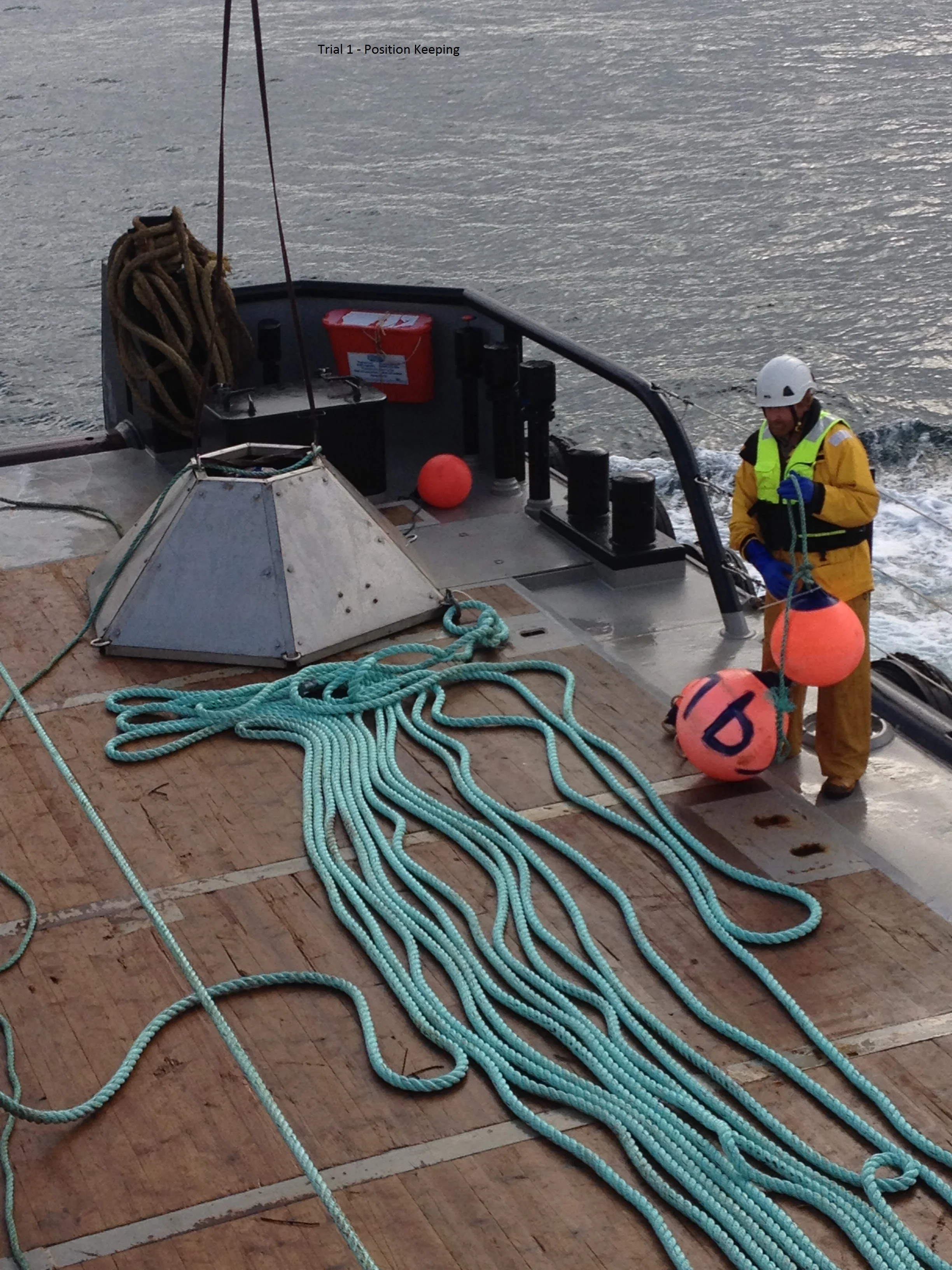
Preparing the seabed frame and buoys for a position-keeping trial
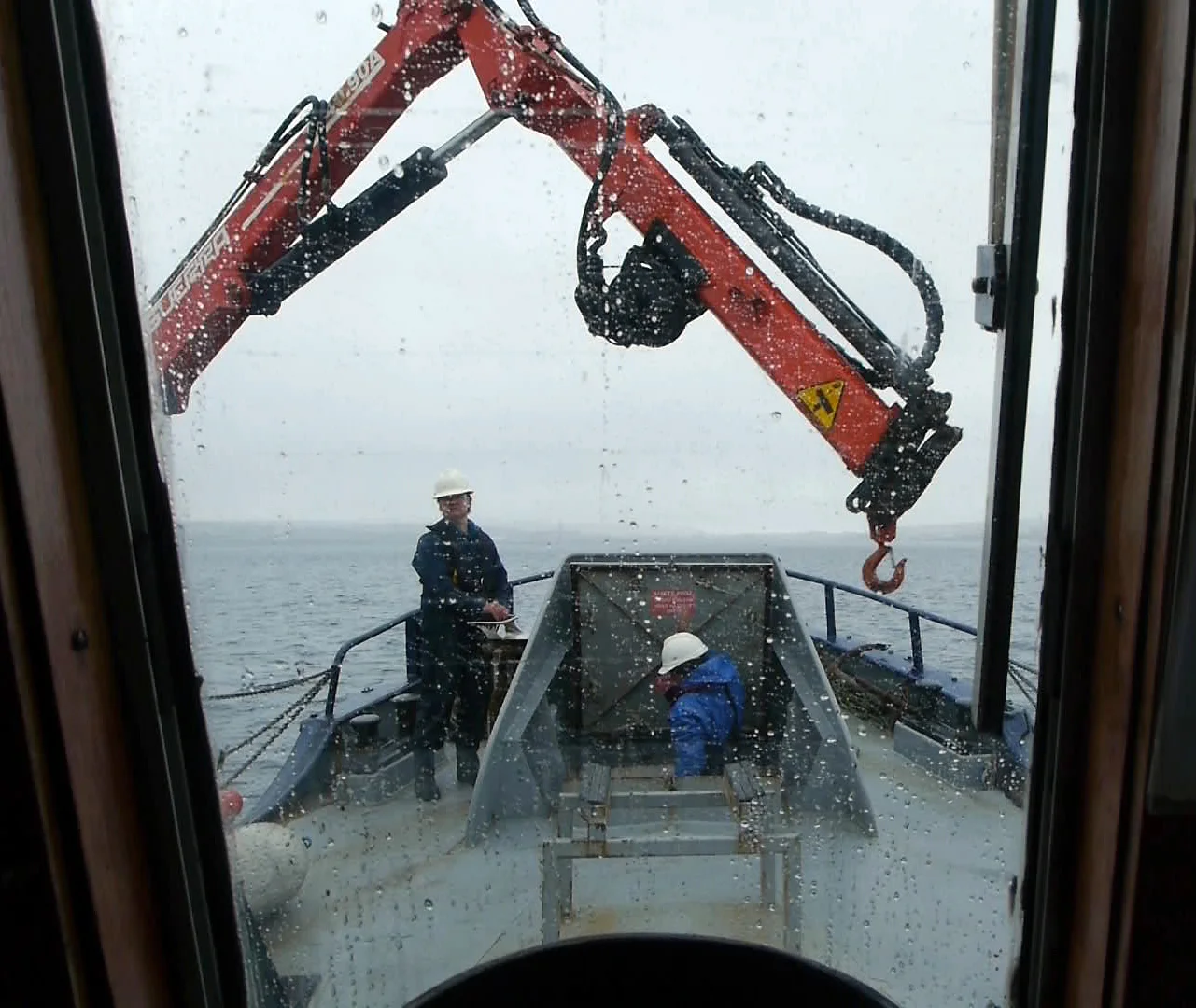
Deploying an ADCP from a workboat at the trial site
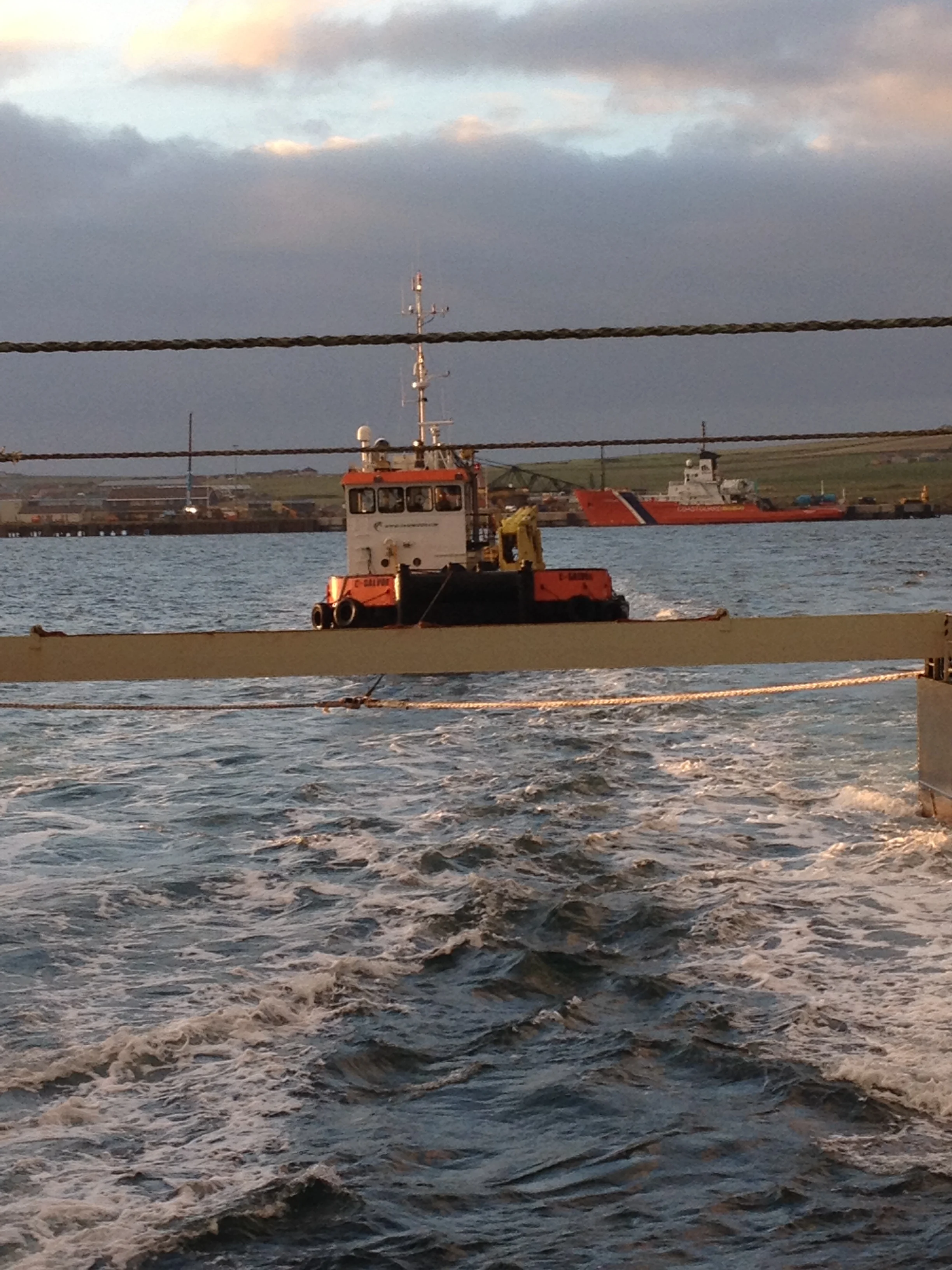
Workboat towing a barge during the vessel trials
Results
7 cm
horizontal position accuracy after RTK post-processing
0.5 m
position-keeping precision of the moored barge
2.2 m/s
peak current during moored workboat trials
- Synchronised records of current, vessel motion and mooring loads for each trial manoeuvre
- Moored barge held position to about 0.5 m, with about 1 m repeatability between patterns
- Four-line mooring gave tighter position keeping than three lines for the workboat trials
- Load measurements gave crews a practical understanding of mooring loads and how they vary in swell
- Objective basis for defining operational limits and planning offshore operations in the sector