
Client
Date
Location
Budget
Needs
CCI Nice Côte d’Azur and the City of Cannes undertook the repair and reinforcement of the Laubeuf and Large breakwaters of the Old Port of Cannes, with a new armour layer of concrete blocks and a wave return wall. The works were planned in three seven-month phases between 2018 and 2021, on a site exposed to offshore swell. The project owners needed a continuous measurement of the incident waves 300 m off the breakwater for the whole duration of the works.
Objectives
Measure directional waves every 20 to 30 minutes (Hm0, Hmax, periods, directions, spreading) throughout the construction and non-construction phases
Measure wind at the same location and make all data available online in real time, downloadable in CSV format
Report on each construction phase, with a focus on the roughest sea states
Missions
Resources deployed
EIVA Toughboy directional wave buoy, replaced in January 2020 by a Sofar Spotter buoy coupled to a special mark
Vaisala anemometer installed on the special mark
Chain and clump weight moorings laid on the seagrass seabed in about 17 m of water
Real-time telemetry to a web server with CSV download and automatic drift alert
Ifremer MARC wave model used to fill short measurement gaps
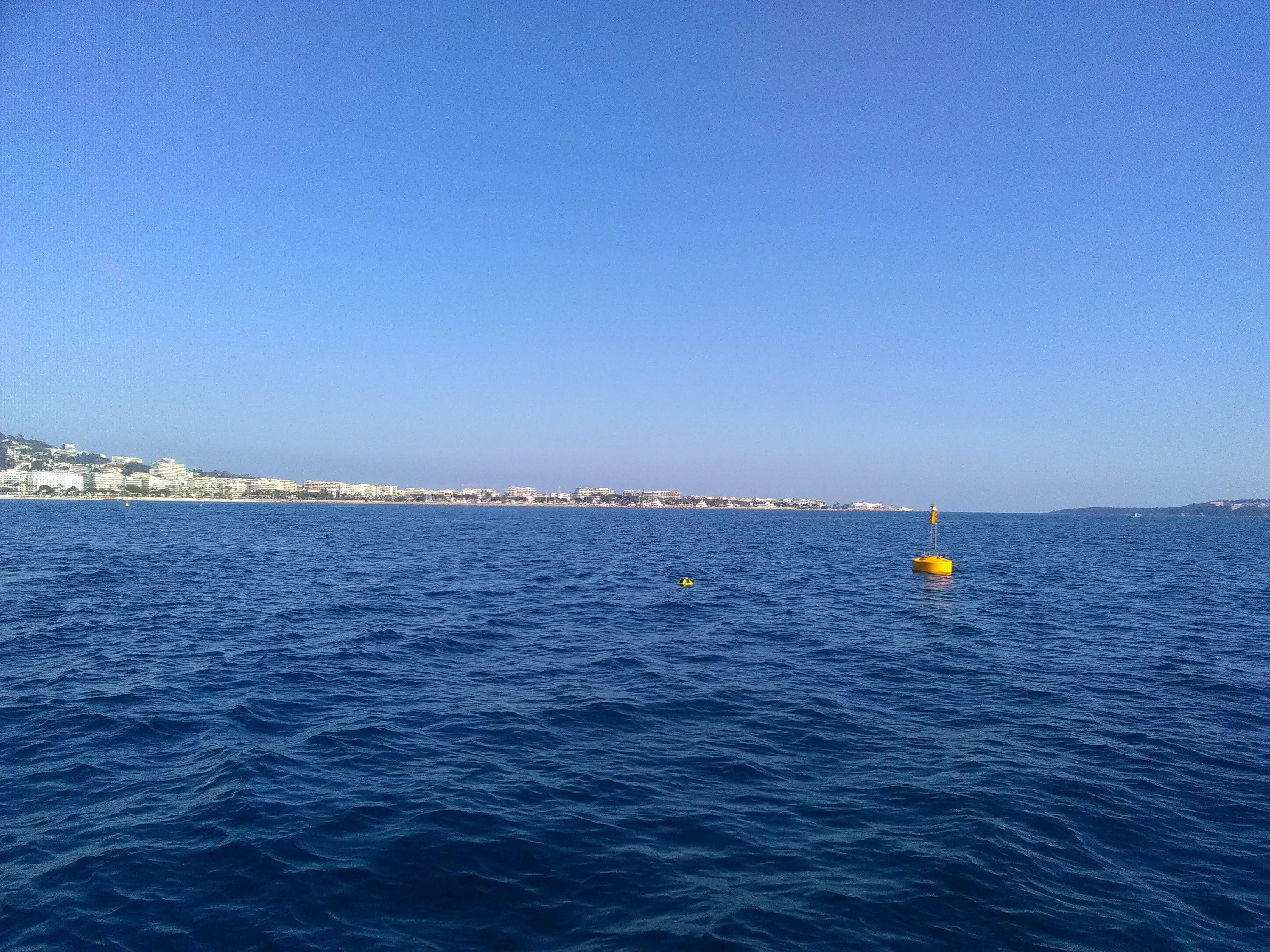
Spotter wave buoy deployed near the special mark off Cannes
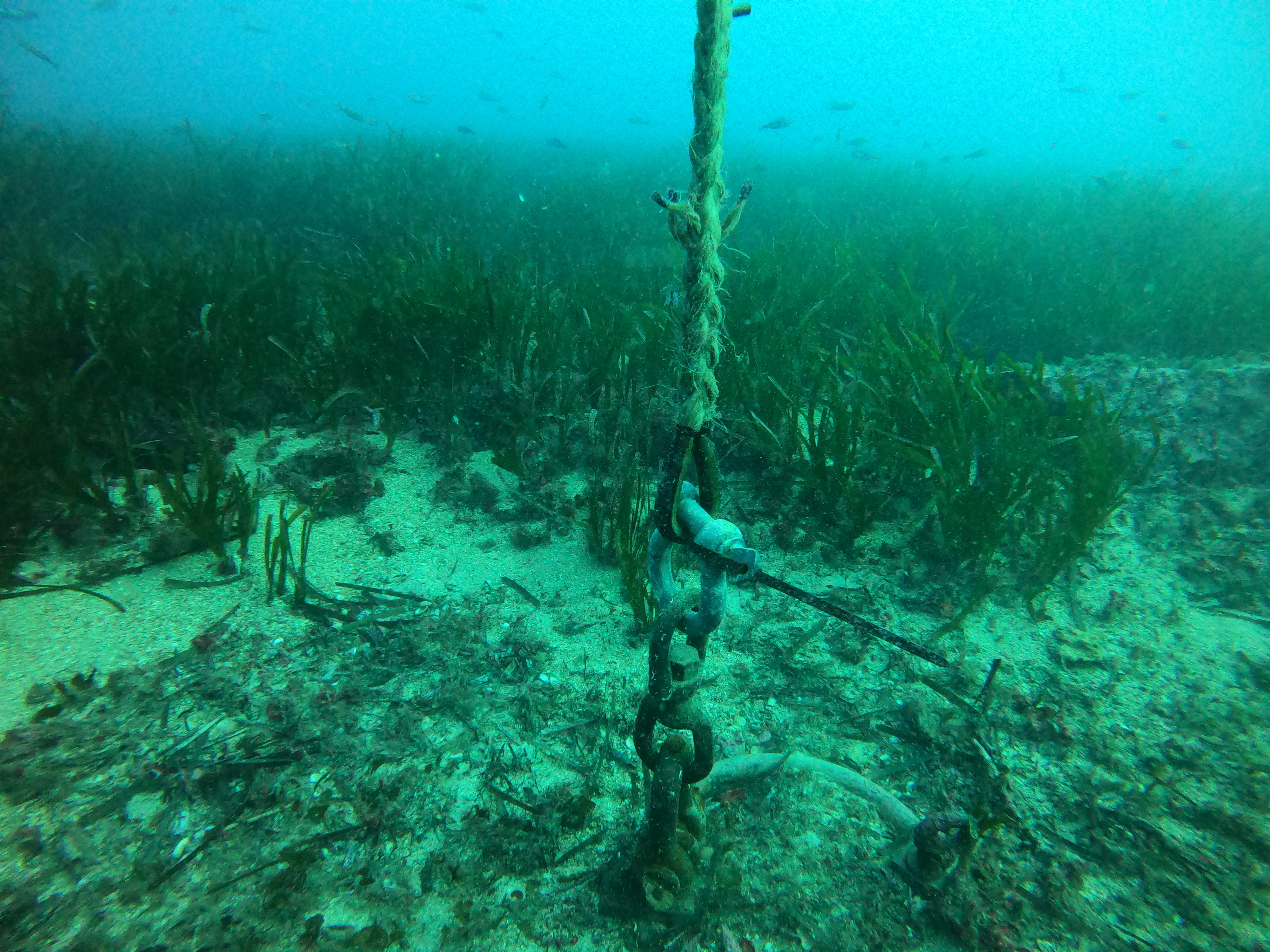
Buoy mooring on the seagrass seabed
Results
5
monitoring phases (3 during works)
99 %
data availability
300 m
off the breakwater
- Continuous wave and wind records from autumn 2018 to spring 2021, covering all three construction phases
- Significant wave height time series after quality control for each phase, with detailed reviews of events above 0.9 m
- Real-time data used by the project owners and contractors to follow sea conditions during the works
- Short interruptions bridged with MARC model results, whose agreement with the buoy had been checked over two years
Our added value
When transmission from the first buoy proved unreliable, DynamOcean proposed and installed a Spotter buoy coupled to a special mark, which secured real-time data for the rest of the project. Gaps were filled with a wave model validated against the buoy, so the client received a continuous record.