

Client
Date
Location
Budget
Needs
Voith Hydro was designing a tidal turbine for testing at Fall of Warness, EMEC's tidal test site in Orkney. Turbulence is a major driver of fatigue loads and power fluctuations, but a standard 4-beam ADCP cannot resolve it without assuming the turbulence anisotropy. Voith Hydro needed reliable turbulence, wave and tidal current data at the berth to feed its turbine design.
Objectives
Measure turbulence with more independent beams than a standard ADCP
Derive turbulence parameters usable in turbine load modelling software
Characterise waves and predict tidal levels and currents over the long term for design
Missions
Resources deployed
Two Teledyne RDI Workhorse Sentinel 600 kHz ADCPs in master/slave mode, one tilted so one beam points vertically
Purpose-built twin-ADCP seabed frame with acoustic tilt-sensing pingers
Single-ping recording about every 0.53 s over 32 days
WavesMon, T_TIDE and in-house Matlab and Scilab tools
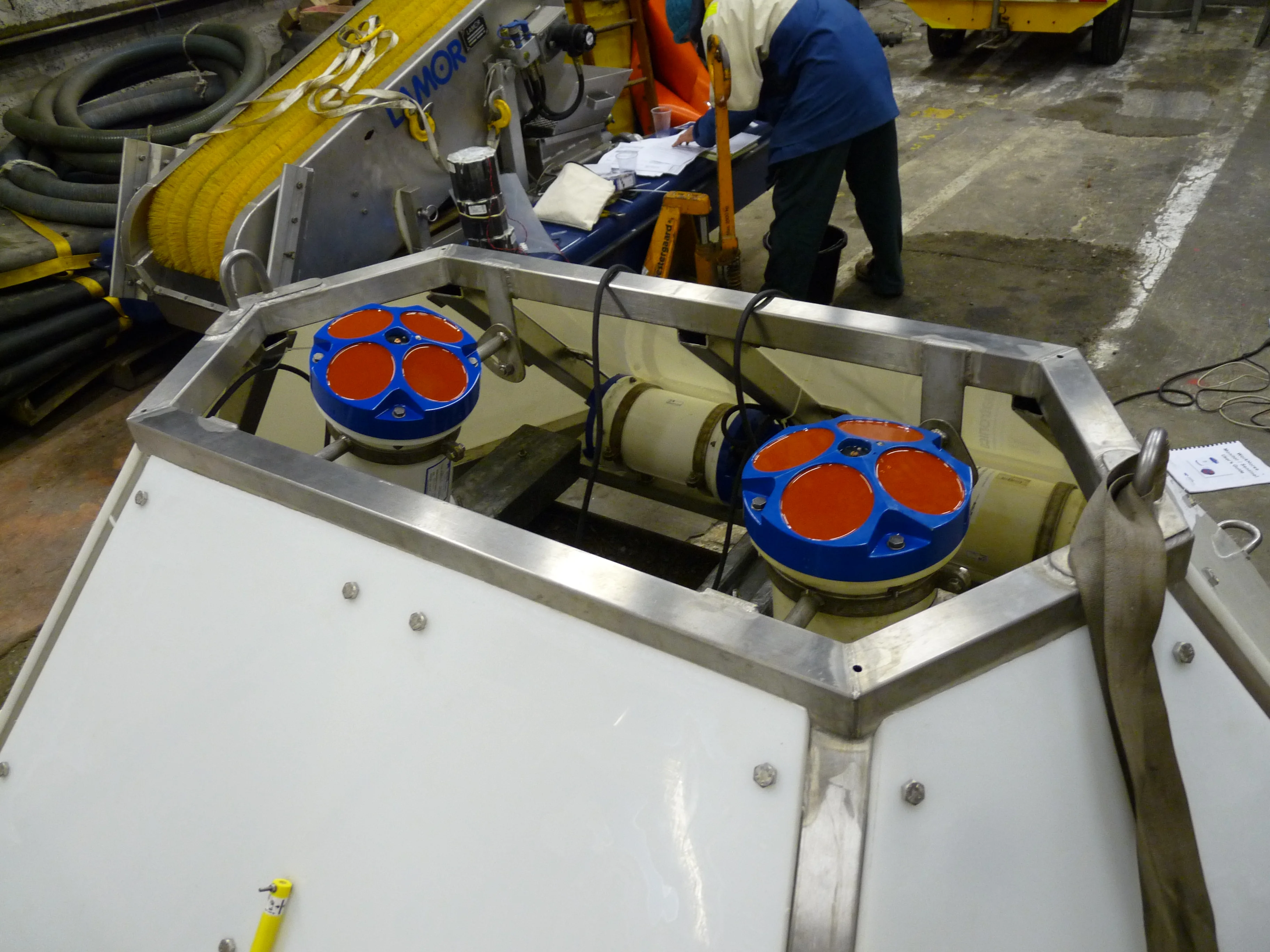
Two ADCPs installed in the seabed frame before deployment
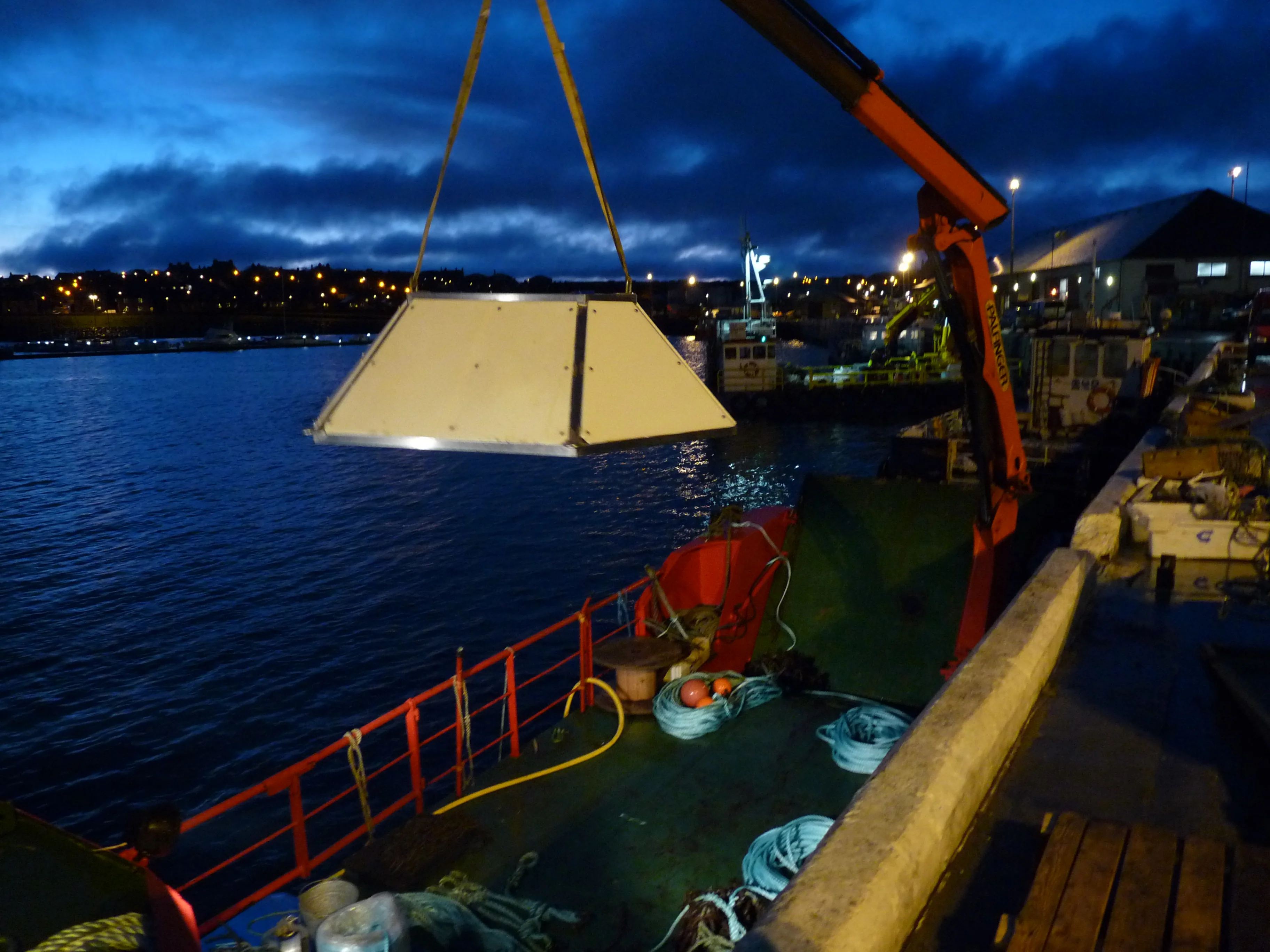
Loading the ADCP frame onto the vessel at dusk
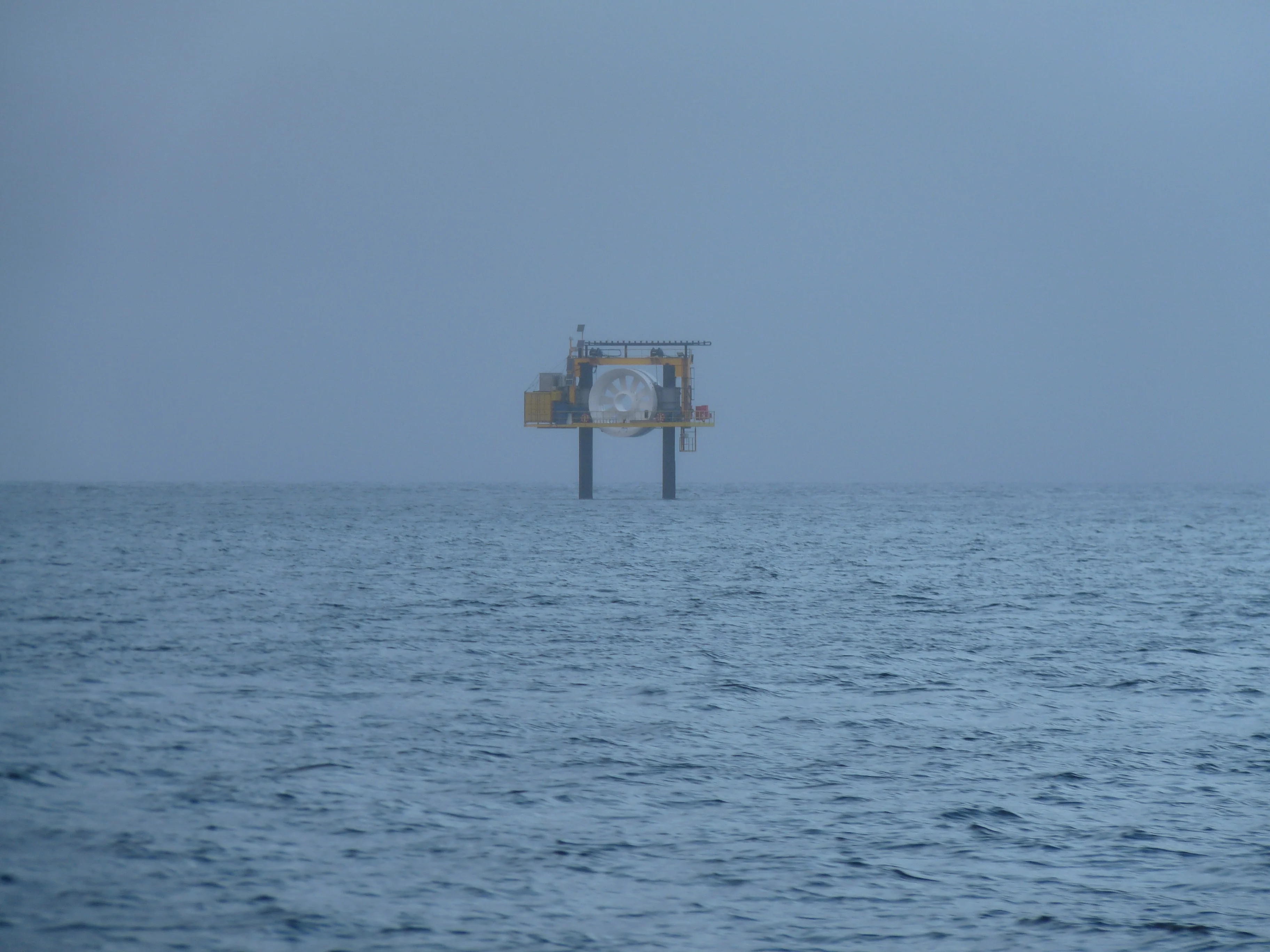
The Fall of Warness tidal test site in Orkney
Results
32
days of measurements
8
acoustic beams from two synchronised ADCPs
4.4 m/s
maximum predicted current at hub height
3.0 m
maximum significant wave height measured
- Twin-ADCP measurements and remote tilt detection proven in a strong tidal flow
- Turbulence quantities derived without an assumed anisotropy, a clear improvement on 4-beam data
- Reliable wave data including spectra; largest waves came from the Atlantic against the ebb
- Long-term level and current predictions judged suitable for the turbine design at this berth
- Turbulence parameters produced for use in Tidal Bladed load modelling
Our added value
DynamOcean re-established the turbulence equations for this beam configuration. Because the standard wave software fails in strong currents, it also wrote its own code to merge pressure and surface-tracking spectra, giving reliable wave spectra over the full frequency range.