

Client
Date
Location
Budget
Needs
The TIGER project (Interreg France (Channel) England) brought together tidal developers, including SIMEC Atlantis and HydroQuest, and the marine contractor SAAS. The consortium needed ADCP measurements at four stations in the Raz Blanchard, one of the most energetic tidal sites in Europe, with a boulder seabed and strong currents. The frames and instrument settings had to be adapted to these conditions and the offshore operations closely planned and supervised.
Objectives
Configure the ADCPs so that their range covers the whole water column, including tide, surge and wave crests
Keep the frames stable and level on a boulder seabed, with ADCP tilt limited to 10°
Position the frames accurately and allow their recovery in strong currents
Missions
Resources deployed
Four gimbal-mounted seabed frames carrying Teledyne RDI Sentinel V50 and Nortek Signature 500 ADCPs, sampling at 2 Hz with 1 m cells
Telescopic legs for boulders of about 30 cm, gimbal weights and tilt stops at 10°
Pop-up recovery buoys with Sonardyne acoustic releases, transponders and tilt sensors
Sonardyne USBL and Hemisphere dual-antenna GNSS on the SAAS vessel Minibex
Vessels from Cherbourg, divers and ROV for the recovery operations
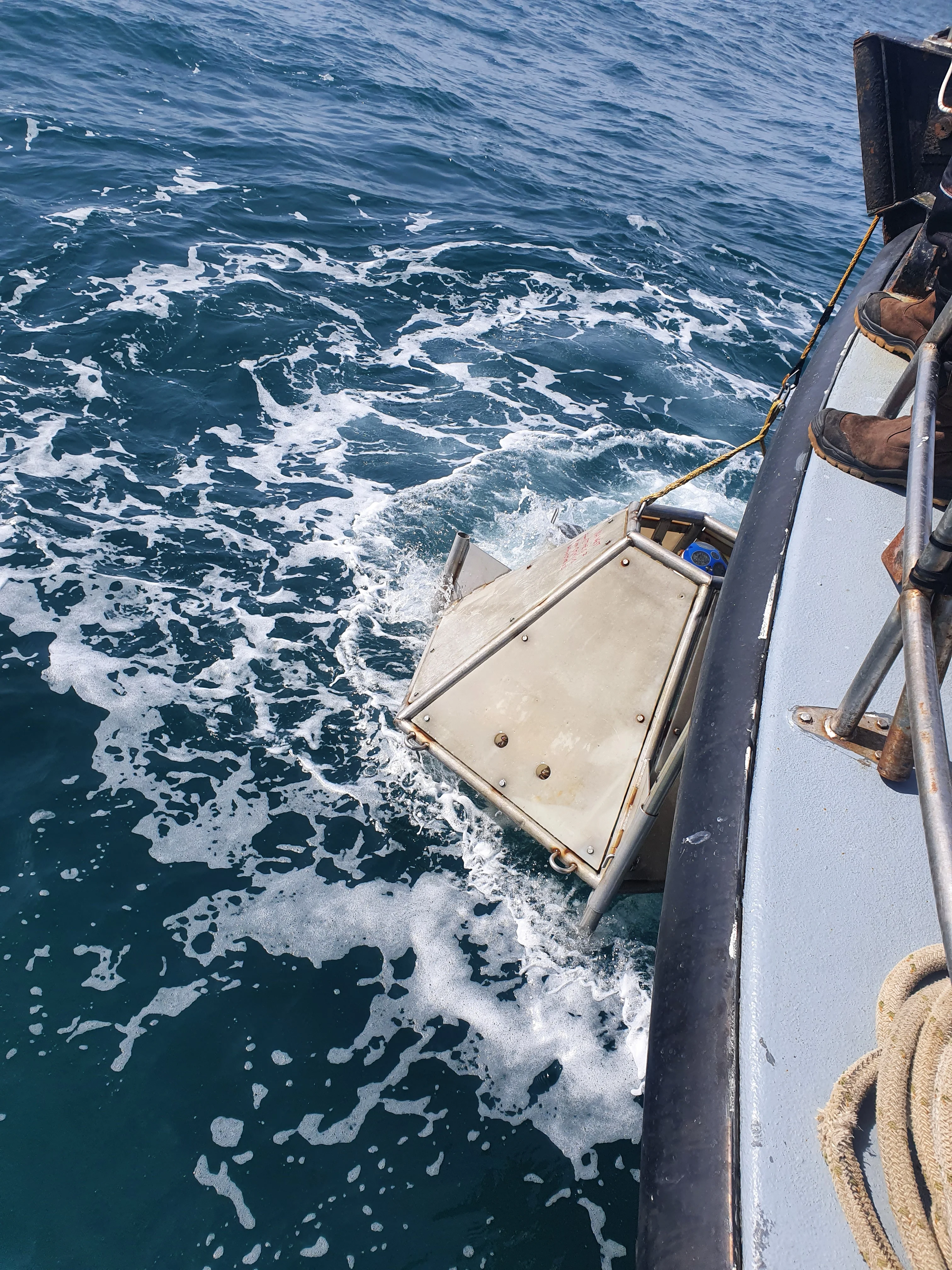
Lowering the ADCP frame to the seabed in the Raz Blanchard
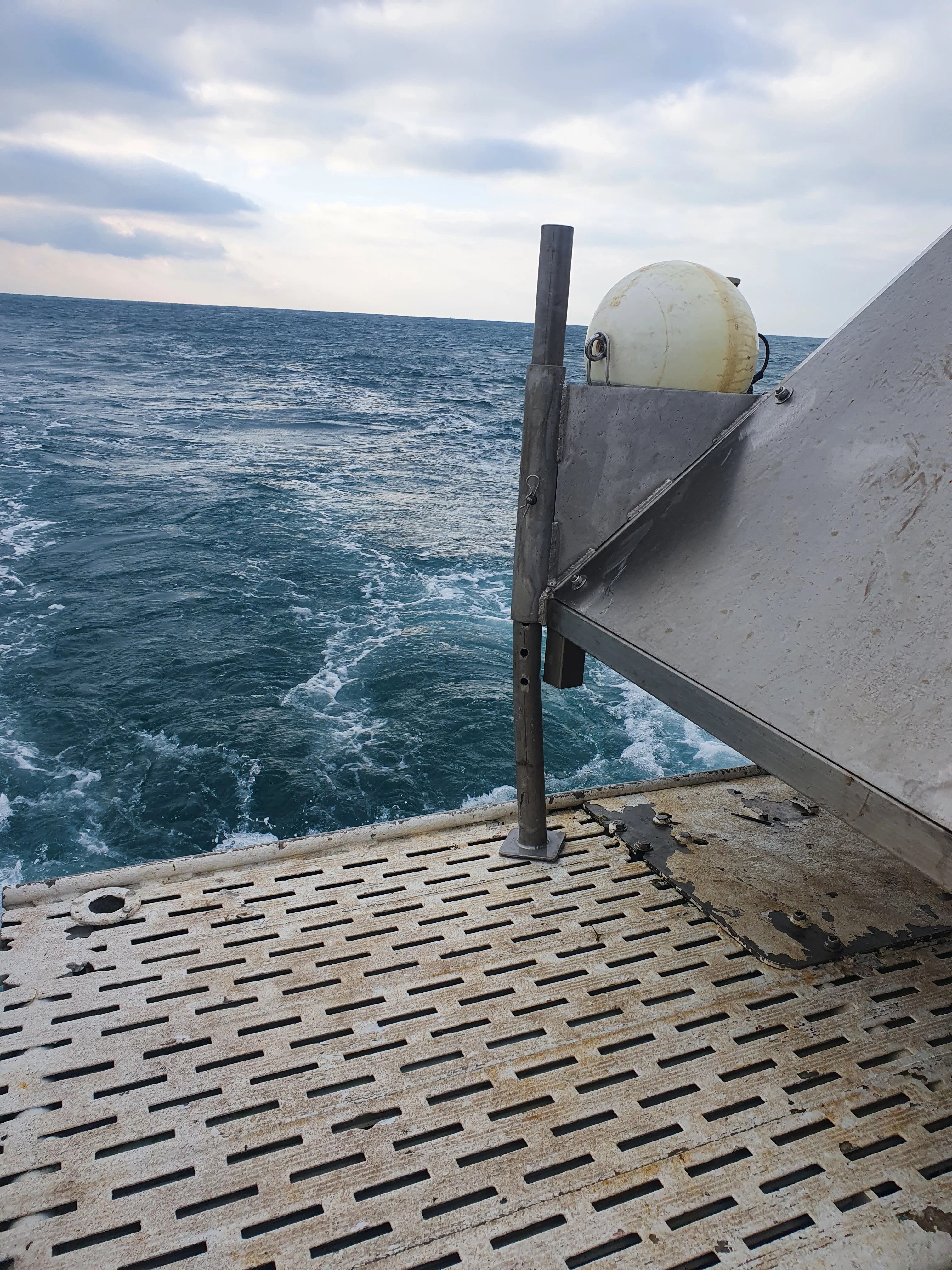
ADCP frame and recovery float on the aft deck before deployment
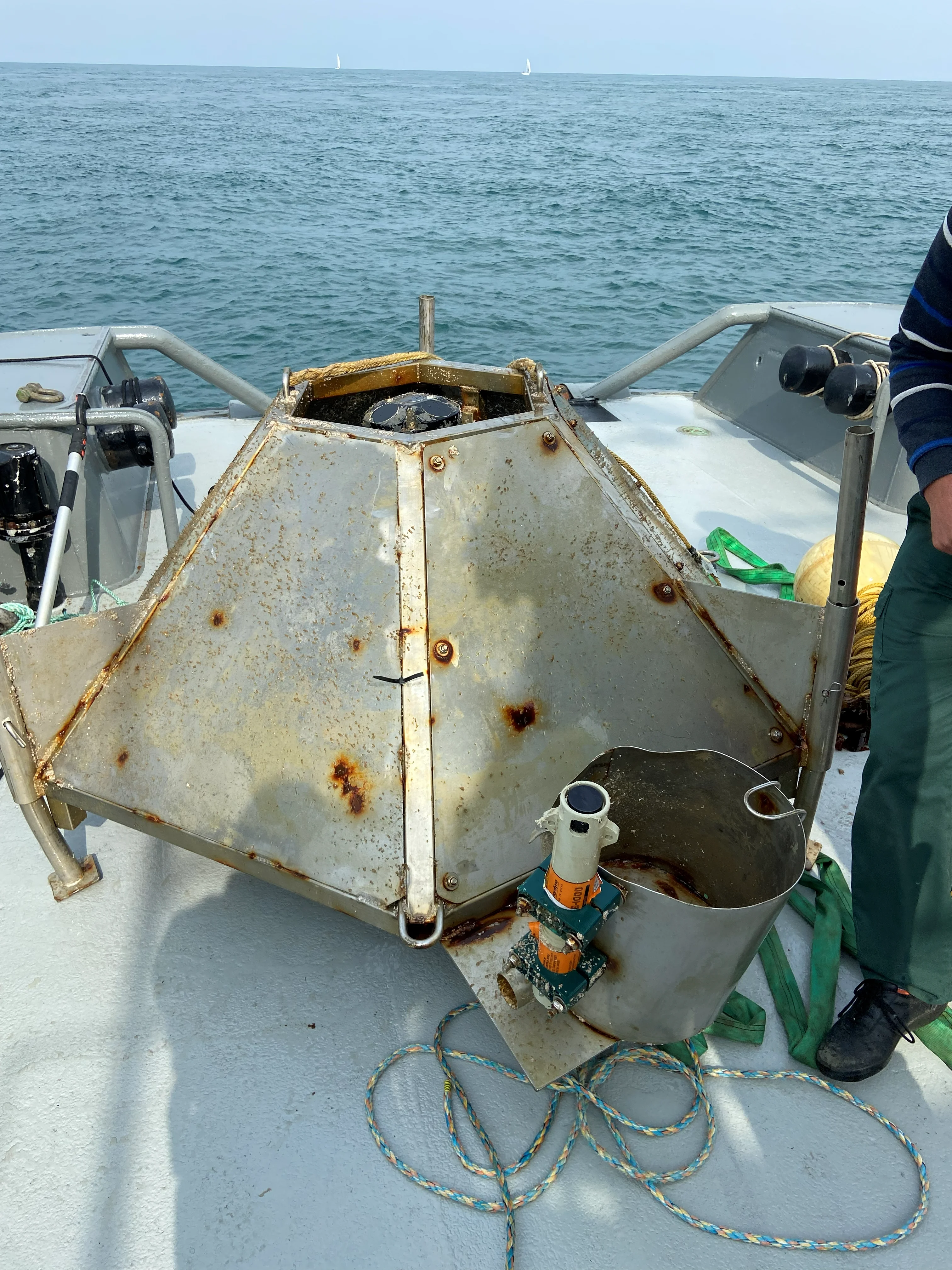
Frame recovered on deck after its deployment period
Results
4
ADCP frames deployed
40 m
maximum water depth
< 10°
frame tilt confirmed by USBL
- Four frames deployed in January 2022 at the four planned stations
- Positions and tilts of every frame checked in real time at touchdown, all within the 10° limit
- ADCP configurations revised so that the measured profile reaches the sea surface in all tidal conditions
- Practical recommendations issued for future deployments in the Raz Blanchard, notably on corrosion protection and battery autonomy
Our added value
DynamOcean found that the original configuration of one ADCP would not reach the surface and proposed a new set-up extending its range from 43.5 m to 60.5 m. The frames were also modified on site (longer legs, gimbal weights, tilt stops) to suit the boulder seabed.